Dynamic vs Static Residential Proxies: The Ultimate 2025 Guide for Advertisers
獨享高速IP,安全防封禁,業務暢通無阻!
🎯 立即體驗 - 無需信用卡⚡ 即時訪問 | 🔒 安全連接 | 💰 永久免費
全球覆蓋
覆蓋全球200+個國家和地區的IP資源
極速體驗
超低延遲,99.9%連接成功率
安全私密
軍用級加密,保護您的數據完全安全
大綱
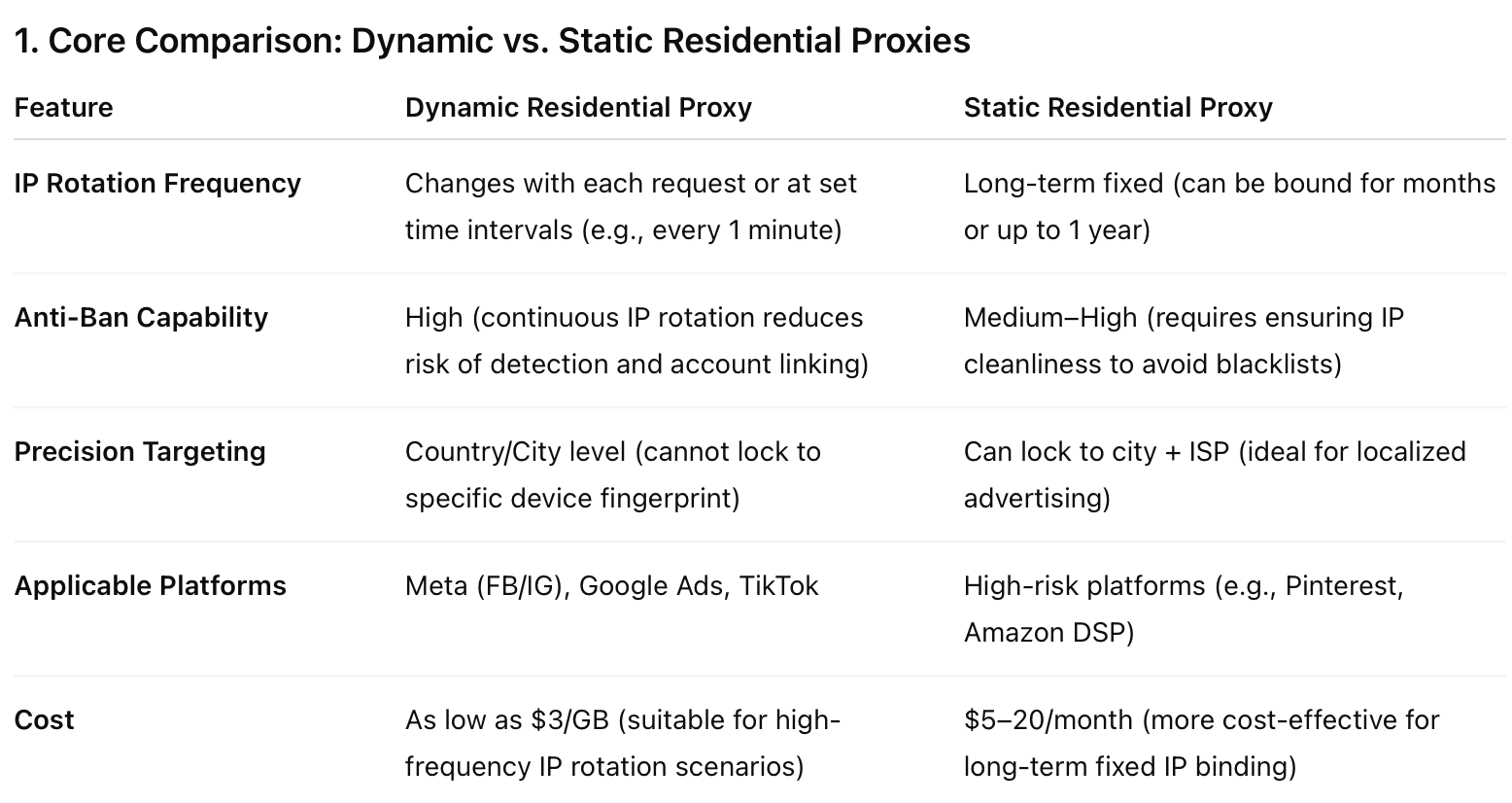
In the field of digital advertising, the choice of proxy IP directly affects ad account stability, targeting accuracy, and cost efficiency. Both dynamic and static residential proxies have their pros and cons — so how should advertisers choose? Based on the latest 2025 industry data, this article provides an in-depth comparison from three key perspectives — anti-ban capability, targeting precision, and cost-effectiveness — to help you optimize your ad ROI.
2. How Should Advertisers Choose? Match by Business Scenario
1. Scenarios Where Dynamic Proxies Are Preferred
✅ Large-scale ad account matrix management (e.g., 50+ accounts)
Dynamic IP rotation effectively avoids device + IP linkage detection from Meta/Google.
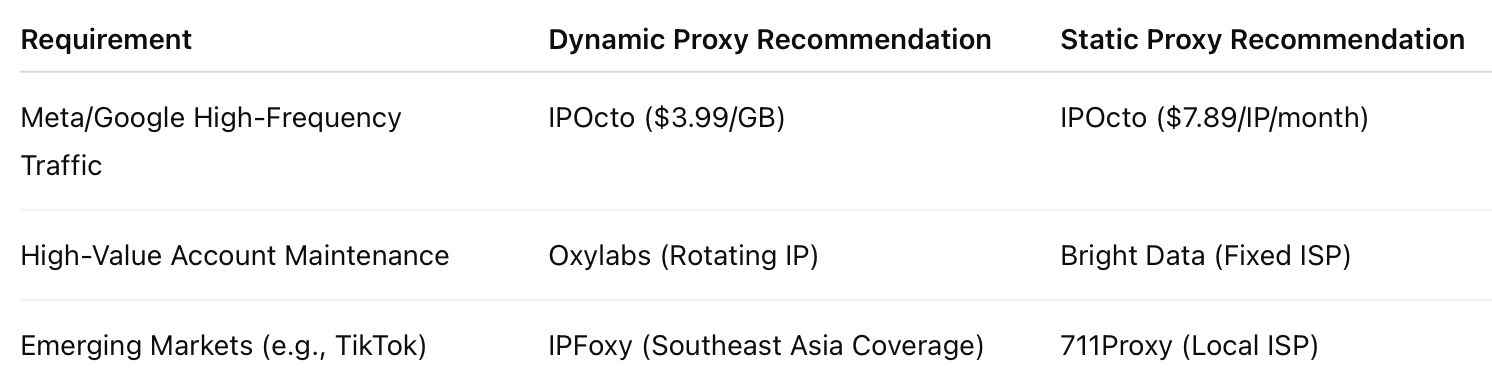
Recommended tool: IPFLY Dynamic Residential Proxy (supports auto-rotation + integration with fingerprint browsers).
✅ A/B testing and rapid scaling
Test different ad creatives/audiences with different IPs to avoid algorithm throttling.
✅ Low-cost traffic campaigns (e.g., push traffic)
Dynamic proxies have low traffic costs (e.g., IPFoxy only $3.5/GB), ideal for short-term campaigns.
2. Scenarios Where Static Proxies Are Preferred
✅ High-budget brand advertising (e.g., Amazon DSP, Pinterest)
Static IPs bound long-term to accounts improve trust scores and reduce account bans.
Recommended tool: Bright Data Static Residential IP (99.2% clean history).
✅ Localized precision targeting (e.g., Deutsche Telekom ISP proxies)
Fixed IPs can mimic real local users, increasing CTR (e.g., German e-commerce ads saw +18% CTR).
✅ Account survival during Black Friday/major sales events
Static IPs reduce abnormal login triggers and secondary verification
(Case: a Black Friday ad team reduced ban rates from 12% → 3%).
3. Optimization Strategy for 2025: Dynamic + Static Hybrid Approach
Hybrid Usage Logic:
- Cold start phase: Use dynamic proxies to test ad creatives, avoiding bans on main accounts.
- Stable phase: Switch to static proxies for binding high-value accounts (e.g., $10k+/month budget accounts).
4. Final Conclusion: 2025 Proxy Selection Recommendations for Advertisers
- 90% of advertisers should use dynamic proxies: Low cost, high flexibility, ideal for multi-account setups/testing phases.
- 10% for high-value scenarios should use static proxies: Brand ads and account stability during major promotions require long-term stable IPs.
- Hybrid solutions are the trend: Refer to IPOcto’s “Dynamic + Static” combination (click to view official solution).
Get Custom Solutions → [Click to jump]
